
It Is Not Either/Or
Sellers sometimes ask me whether they should invest their time in better photos or start shooting video. The answer is both, but not equally for every product. Photos and video serve different purposes in the buying decision, and understanding when each one shines will help you decide where to spend your effort.
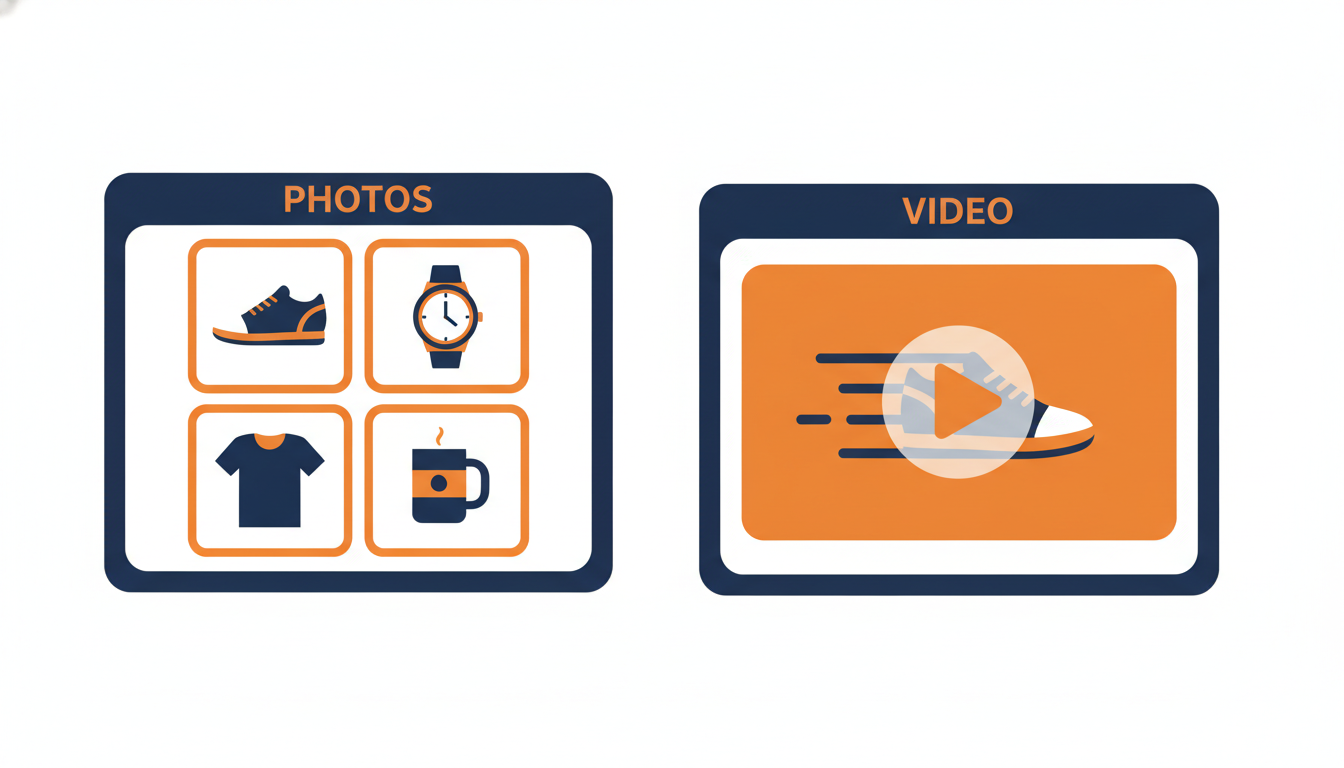
Photos are the foundation. Every listing needs them. They are what buyers scan first when browsing search results and category pages. They load instantly, they are easy to flip through, and marketplaces are built around them. No listing should ever skip photos.
Video adds depth that photos cannot. It shows motion, demonstrates functionality, reveals condition in three dimensions, and lets buyers hear the product. But video takes more time to create and not every product needs it. The key is knowing which products benefit most from video and which are fine with just good photos.
Where Photos Do the Job
For many product categories, well-lit photos from multiple angles are all a buyer needs. New items in known categories are the clearest example. If you are selling a brand-new, sealed phone case, buyers already know what it looks like and how it works. They just need to confirm the color, verify the model compatibility, and see that it is actually new. Photos handle this perfectly.
Clothing is another category where photos are the standard. Buyers expect to see the garment laid flat or on a mannequin, front and back, with close-ups of fabric texture and labels. This is how the entire clothing market works online, from fast fashion to vintage. Video rarely adds enough value to justify the extra effort for standard clothing listings.
Products that are well served by photos alone:
- Simple accessories and commodity goods
- Craft supplies where condition is not a question
- New, sealed items in well-known categories
- Clothing (standard or vintage, where there is nothing to demonstrate)
If your product is what the buyer expects it to be and there is nothing to demonstrate, photos do the job.
Where Video Wins
Video becomes a significant advantage in a few specific situations. The most important is condition-sensitive items. Used goods, vintage items, refurbished electronics, and anything where the buyer is worried about what they are actually getting will benefit from video. A 30-second video slowly rotating a vintage watch or showing the screen of a used laptop is worth more than ten photos.
Electronics and mechanical items benefit from video because buyers want to see them work. A power tool spinning, a vintage radio playing, a keyboard with all keys functioning — these demonstrations are difficult or impossible to convey in photos. A buyer who sees your product working on video has much more confidence than one who has to take your word for it.
Musical instruments are a strong video category for obvious reasons. Buyers want to hear the instrument, not just see it. The same applies to vinyl records, speakers, music boxes, and any product where sound is part of the value. eCommercePlayer supports audio-only players for exactly this use case. As we cover in our guide to showing product condition on video, honest demonstrations build trust that photos simply cannot match.
Collectibles and antiques also benefit heavily from video. Collectors want to inspect items closely and see them from every angle. A video showing the fine details of a porcelain figurine, the pages of a first edition book, or the movement of a vintage watch gives collectors the information they need to bid with confidence.
The Categories Where Video Has the Most Impact
Based on what I have seen from sellers using eCommercePlayer over the years, here are the categories where video consistently makes the biggest difference in sales and return rates.
| Category | What Video Shows | Why It Matters |
|---|---|---|
| Used electronics | Screen, ports, boot sequence | Buyers cannot test in person |
| Musical instruments & audio | Tone, playback, condition | Sound cannot be conveyed in photos |
| Vintage & antique items | Wear, patina, mechanical function | Condition is the entire sale |
| Auto parts & machinery | Operation, sound, starting | Photos cannot prove function |
- Used electronics — laptops, phones, tablets, gaming consoles. A video showing the device powered on, the screen working, and the ports and buttons functioning addresses the buyer's biggest concern directly.
- Musical instruments and audio equipment — guitars, amplifiers, turntables, speakers, microphones. Even a 30-second audio clip recorded on a phone gives buyers information they will not get anywhere else.
- Vintage and antique items — clocks, mechanical toys, watches, collectible figurines. Slow close-ups of wear, demonstrations of mechanical function, and all-around views give buyers confidence.
- Auto parts and machinery — engines, motors, tools, mechanical components. A photo of an engine tells you nothing about whether it starts.
The Best Strategy: Photos First, Then Add Video
The practical approach is to start every listing with solid photos. Take clear, well-lit shots from multiple angles. This is your baseline, and it is required for every listing regardless of category.
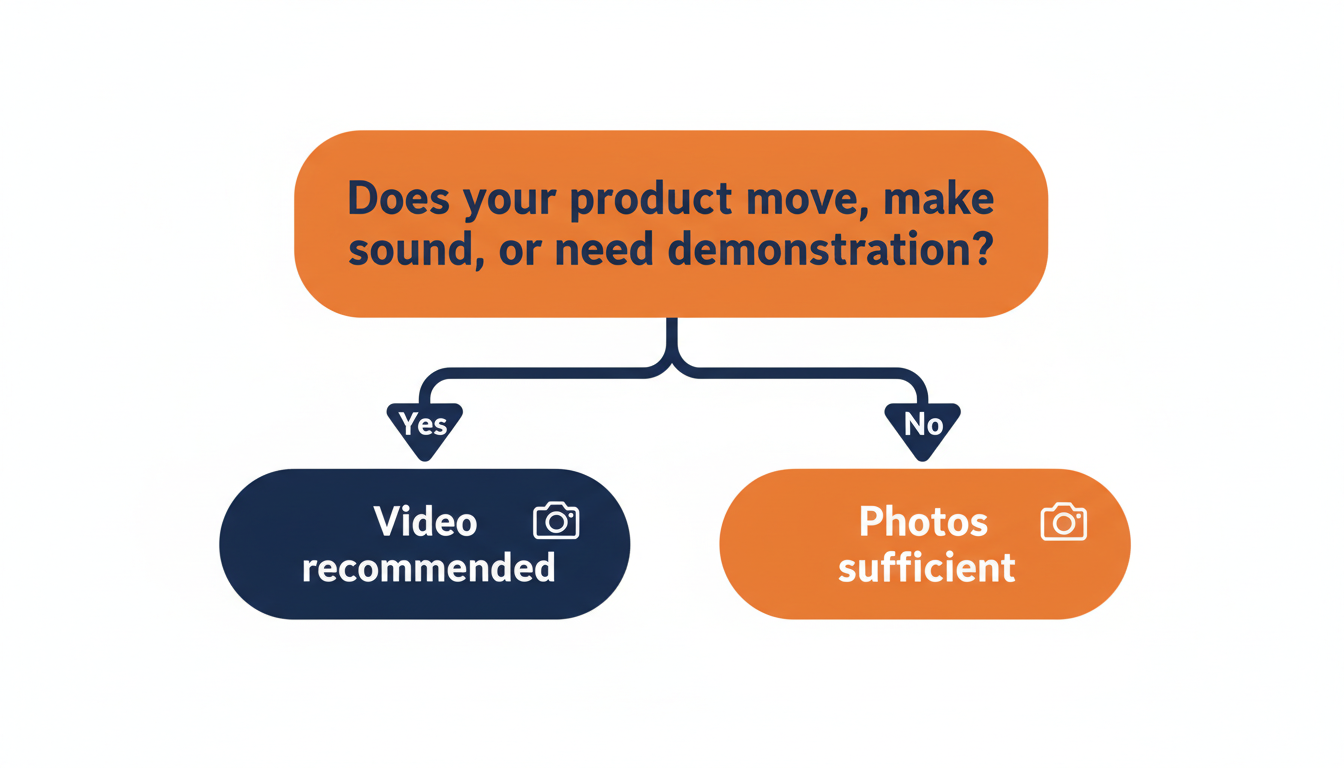
Then ask yourself: would a buyer learn something meaningful from a video that they cannot get from these photos? If the answer is yes, shoot a short video. If the product sits there and does nothing, photos are probably enough.
For high-value items, video is almost always worth the effort. The more expensive the product, the more hesitation a buyer has, and the more a video can do to close the gap. A $15 phone case probably does not need a video. A $500 vintage amplifier absolutely does.
For items where returns are a risk, video pays for itself by reducing those returns. If a buyer can see and hear exactly what they are getting before they buy, they are far less likely to be disappointed when it arrives. The five minutes you spend shooting a video can save you the time and cost of processing a return. To learn the ideal format, see short-form product video: the 60-second sales pitch.
Putting It Together
Here is the simple framework:
- Every listing gets good photos
- High-value items, used goods, electronics, instruments, and anything mechanical also get a short video
- Items where sound matters get an audio clip
- Everything else can rely on photos until you see a reason to add video
When you do add video, keep it short and focused — thirty to ninety seconds. Show what the photos cannot show: motion, function, sound, condition from every angle. No fancy editing needed. Upload to eCommercePlayer, create a player, embed it in your listing, and move on to the next one.
The sellers who do best are not the ones who agonize over production quality. They are the ones who consistently add video to the listings where it matters most and skip it where it does not. For a deeper look at why video moves the needle on conversions, see why product video increases sales. That is the whole strategy.
If you sell on eBay, our eBay listing optimization checklist for 2026 covers how to combine photos and video for maximum impact.
Related Articles
Ready to add media to your listings?
Create your free account in under a minute. No credit card required.